

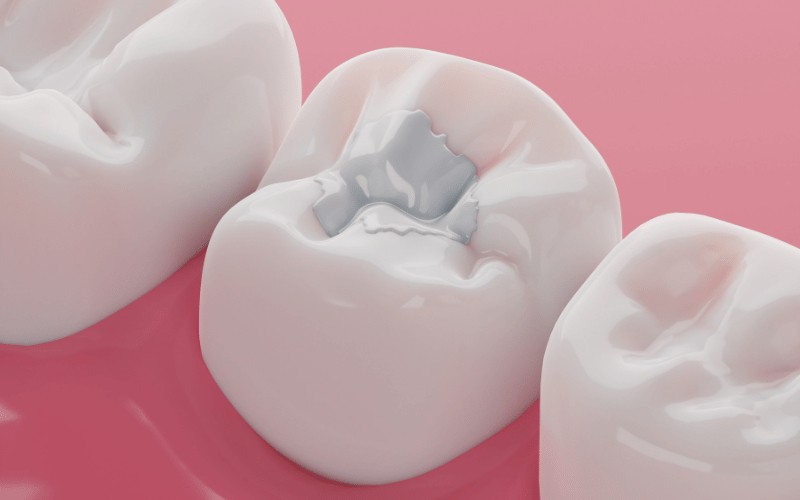
Did you know? Dental fillings aren’t just for cavities—they can also be used to repair cracked or broken teeth and improve their appearance.
Treatment Type #4
Dental Fillings: What to Expect and How to Care for Them
Broken teeth are easily repaired through the assistance of fillings. They straighten up the appearance and serviceability of your teeth. You may require a filling, in case you experience dental sensitivity, slight pains, severe pains, or you see some holes on your teeth.
→ Our Dental Filling Procedure:
Our dental filling procedure effectively addresses cavities and minor tooth damage, restoring both health and function to your teeth.

1. Numbing the Area
Your dentist will first put on a numbing lotion and then a local anaesthetic to make you comfortable and pain-free during the treatment.
2. Removing the Decay
Dental instruments are used to carefully remove the decayed component of the tooth, leaving a clean space for the filling.
3. Filling the Tooth
The region that was cleaned out is filled with a material that works best for you, filling the cavity and fixing the tooth.
→ Learn About the Most Common Types of Dental Fillings:
In modern dentistry, patients can opt for different dental filling materials like composite and amalgam, tailoring their choice to factors like aesthetics, durability, and price.

Did you know?
Both composite and amalgam fillings have undergone significant improvements over time, with ongoing research aimed at enhancing their durability, longevity, and safety.
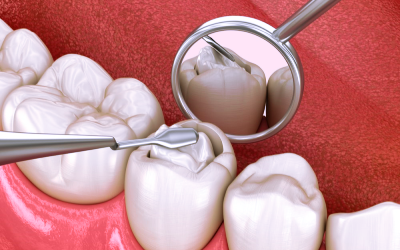
Composite Fillings
Composite fillings are tooth-colored restorations made of a mixture of plastic and glass materials, blending seamlessly with natural teeth.
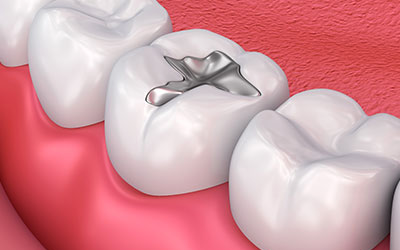
Amalgam Fillings
Amalgam fillings, comprised of a mixture of metals including silver, mercury, and tin, are renowned for their durability and affordability.
→ What are the Benefits of Dental Fillings?
Fillings do more than just cure cavities; they also have other benefits. Here’s what they can do for you:
Restoration of Tooth Structure
Fillings restore the natural shape and strength of teeth that have been affected by disease or minor trauma.
Stops Decay from Spreading
Fillings stop cavities from getting worse by sealing the region around them.
Reduces Tooth Sensitivity
They reach to the exposed parts of the tooth, and this makes it easy to eat hot, cold or sweet foods.
Boosts Oral Health
Fillings help keep your mouth healthy by stopping problems before they get worse.
Blends with Natural Teeth
Matches the Colour of your genuine Teeth. Fillings that are toothed colored look just like your real teeth and thus, they do not look obvious.
Strong and Long-Lasting
In the case of modern fillings, the filling can last a long time as you take good care of your filling, which shields your teeth, hence preventing their destruction over a long time.
Helps Prevent Tooth Loss
Getting fillings for cavities early on stops them from getting worse and losing a tooth.
Simple and Quick Treatment
Compared to other methods, getting a filling is a quick and less invasive option to treat cavities.
Tips for Aftercare:
Maintaining your fillings will make them last longer and keep your mouth healthy as well.
1. Avoid Hard Foods
For a few weeks after obtaining a filling, don’t eat things that are hard or sticky.
2. Watch Out for Hot or Cold
In the next few days of having sensitive teeth, avoid eating or drinking food or drinks that are too hot or too cold.
3. Keep Teeth Clean
Brushing your teeth and fillings twice a day using fluoride toothpaste and flossing cleans your teeth and fillings.
4. Visit Your Dentist Regularly
The cleanings and checkups will help you note the problems that you may be having with your fillings on time.
(Click to view images)